2026 Football World Cup vs 2022: A 48-Team Revolution
The 2026 football World Cup is the first FIFA men’s World Cup featuring 48 teams, 104 matches, and three host countries: the United States, Canada, and Mexico. The tournament runs from June 11 to July 19, 2026, across 16 host cities, with the final scheduled for MetLife Stadium in East Rutherford, New Jersey. Los Angeles will stage eight matches at SoFi Stadium, while Atlanta’s Mercedes-Benz Stadium will host major knockout fixtures, including a semifinal. The expanded format creates more football, more travel, more potential matchups, and a larger betting market than the 2022 Qatar edition, which contained 32 teams and 64 matches. Football Insights will track team tactics, player statistics, match predictions, and tournament developments throughout the competition. The practical takeaway is simple: choose your host city and match priorities early, then verify official schedules, ticket rules, travel requirements, and responsible wagering limits before committing money.

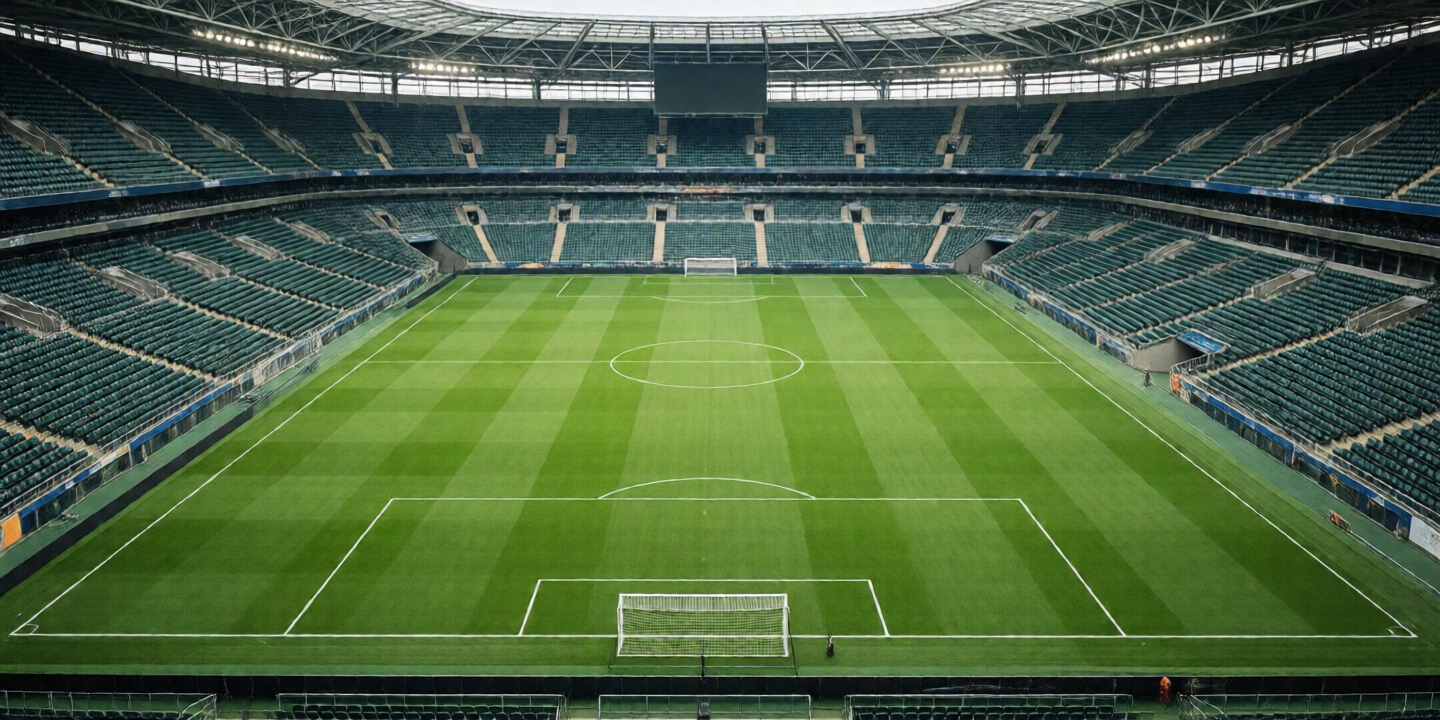
Photo by Ramaz Bluashvili on Pexels
Want a clearer tournament roadmap before the fixtures begin?
The Bottom Line
The 2026 football World Cup is materially larger than previous editions because FIFA has increased the field from 32 to 48 national teams and the match count from 64 to 104. That expansion changes the tournament’s rhythm, qualification value, squad-management demands, travel calculations, and analytical approach; it is not merely a longer group stage. FIFA’s official tournament information confirms the competition’s three-country structure and 16-city footprint, making geography one of the central variables for supporters, broadcasters, teams, and bettors. FIFA’s official World Cup 2026 page remains the best source for confirmed competition information.
For readers following Football Insights, the most useful distinction is between confirmed facts and forecast material. Host cities, stadiums, dates, and format rules can be verified; winner predictions, player projections, and betting prices change as injuries, lineups, qualification results, and market liquidity develop. The United States, Canada, and Mexico qualify automatically as host nations, while the remaining places are allocated through FIFA’s confederation qualification process. That means the competitive picture will continue changing until qualification is complete.
A disciplined reader should separate three financial figures:
- Turnover: the total amount wagered.
- Gross return: the amount paid back before deductions.
- Net position: gross return minus total stakes, losses, and applicable fees.
This distinction matters because a high volume of bets can create the illusion of success when the actual net position is negative. Football Insights may provide analytical context, but no prediction removes uncertainty, and no market should be treated as guaranteed income.
Why is the 2026 football World Cup different from 2022?
The 2026 football World Cup differs from Qatar 2022 through its 48-team field, 104-match schedule, three-country hosting model, and 16-city geographic spread. The 2022 tournament had 32 teams, 64 matches, and one compact host country, so travel and scheduling conditions were substantially different.
The new structure introduces a group stage containing 12 groups of four teams. The top two teams in each group advance, alongside the eight best third-place teams, producing a 32-team knockout bracket. This increases the number of meaningful matches but also creates more scenarios in which a team can progress despite an uneven group-stage performance.
The scale is significant for bettors and analysts. In 2022, one poor result could quickly damage a team’s qualification prospects; in 2026, a strong goal difference or a favorable third-place ranking may keep a team alive. Therefore, live markets may remain volatile for longer, particularly when several groups reach their final matchday with qualification still unresolved.
[Internal Link: 2026 World Cup format and qualification guide]
What Players Actually See
Players will experience the 2026 football World Cup as a high-intensity competition spread across North America rather than as a single compact event. Host cities range from Vancouver and Seattle in the northwest to Miami and Monterrey in the south, while venues also include Toronto, Mexico City, Guadalajara, Kansas City, Dallas, Houston, Philadelphia, Boston, New York/New Jersey, San Francisco Bay Area, Los Angeles, Atlanta, and the wider host-city network. Distances, climate, altitude, recovery time, and local kickoff schedules can influence performance.
Mexico City is positioned at a significantly higher altitude than most other host locations, while Monterrey brings a hot climate profile. Miami may present heat and humidity concerns, whereas Vancouver offers a different environmental setting. These are not guaranteed performance predictors, but they are operational factors that coaching staffs must model alongside form and tactical matchups.
The United States national team will attract exceptional attention, particularly around its opening match at SoFi Stadium in Inglewood, California, on June 12. Los Angeles is expected to become one of the tournament’s major fan centers, with eight matches, official fan zones, and a 39-day program of public celebrations. The Los Angeles Memorial Coliseum at Exposition Park is scheduled to host the FIFA Fan Festival from June 11 to June 14, combining match broadcasts, music, food, and supporter activities.
Atlanta offers a different proposition. Mercedes-Benz Stadium is a retractable-roof venue in a city with an established soccer culture shaped by Atlanta United FC. Atlanta’s official World Cup program presents the city as a major football destination in the American South, and its semifinal assignment gives the venue unusually high late-tournament relevance. Supporters who want both match access and cultural programming should compare Atlanta and Los Angeles rather than assuming every host city offers the same experience.
Want to compare Los Angeles and Atlanta through a practical planning lens?
How will host-city geography affect World Cup performance?
Host-city geography can affect World Cup performance through travel distance, climate, altitude, kickoff timing, and recovery demands. It will not determine results by itself, but teams facing repeated long-distance movements or unfamiliar conditions may need deeper squad rotation and more conservative preparation.
A useful planning model assigns each match a travel-and-environment score based on four variables:
- Distance between the previous and next venue.
- Temperature and humidity at kickoff.
- Altitude compared with the team’s training base.
- Days available for recovery and tactical preparation.
This approach is more reliable than treating a city label as a prediction. For example, a team accustomed to European summer conditions might prepare differently for Mexico City than for Vancouver, while a nation with extensive travel experience may absorb the logistical burden more efficiently. The competitive edge may emerge through substitutes, medical management, and set-piece concentration rather than through obvious changes in starting quality.
A practitioner-level observation is especially relevant for supporters: the published local kickoff time is not the same as the time your body experiences after crossing several time zones. A match beginning at 9 p.m. in one city may fall during a team’s normal afternoon routine, so performance assessments should consider biological timing, not only venue temperature. This is an analytical edge that basic fixture lists rarely capture.
The 3 Things That Matter Most
Three factors should dominate serious analysis of the 2026 football World Cup: squad depth, tactical adaptability, and schedule efficiency. Talent remains essential, but the expanded format creates more matches and a longer path to the final, increasing the value of rotation and injury prevention. A team that relies on 13 or 14 players may look dominant early and then decline when fatigue accumulates.
Squad depth includes more than substitute quality. It covers the ability to replace a pressing midfielder, a full-back exposed by a particular opponent, or a central defender carrying a yellow-card risk. The 2026 knockout route can require eight matches to win the tournament, compared with seven in the traditional 32-team structure, so coaching decisions may have a larger cumulative impact.
Tactical adaptability is the second major variable. A team that can switch between a back four and a back three, protect a lead without surrendering territory, and attack a low block will have more solutions across different opponents. Football Insights’ tactical coverage should therefore evaluate possession quality, field position, pressing triggers, transition defense, set-piece output, and shot location rather than relying only on final scores.
Schedule efficiency connects performance to tournament design. Teams should be assessed according to rest days, venue changes, kickoff timing, and opponent sequence. A favorable first match does not automatically create a favorable tournament route if the next two fixtures involve high travel demands and limited recovery.
For a rational betting assessment, monitor:
- Expected goals and shot quality rather than goals alone.
- Non-penalty goal difference.
- Set-piece chances created and conceded.
- Pressing success after possession loss.
- Minutes played by core starters.
- Injury reports confirmed by official team sources.
- Price movement and implied probability after removing bookmaker margin.
According to FIFA’s Laws of the Game framework, a standard match contains two 45-minute halves before added time, while knockout matches can proceed to extra time and penalties. That difference matters when comparing group-stage and knockout markets because late-game variance increases when fatigue and elimination pressure combine.

Photo by Vlad Vasnetsov on Pexels
To deepen the statistical side of your preparation, explore our [Internal Link: World Cup team tactics and player statistics hub].
What should bettors measure before choosing a World Cup market?
Bettors should measure team strength, market price, lineup certainty, schedule conditions, and their own net exposure before choosing a World Cup market. A strong team is not automatically a good bet if the available odds already reflect its reputation and leave insufficient value after margin and risk.
The correct sequence is numerical:
- Estimate a probability from performance data.
- Convert the available odds into implied probability.
- Account for bookmaker margin and uncertainty.
- Compare the estimated edge with the downside.
- Set a fixed stake before emotion enters the decision.
For decimal odds, implied probability is calculated as 1 ÷ decimal odds. Odds of 2.00 imply 50% before margin; odds of 1.50 imply approximately 66.7%. If your estimated probability is 55% and the market offers 2.00, the theoretical edge is positive, but it is not a promise of profit. A small analytical advantage can disappear through lineup news, sample-size limitations, correlated wagers, or an incorrectly estimated team probability.
I recommend maintaining a simple ledger with date, event, market, odds, stake, result, gross return, and net position. Add turnover and promotional rebates separately rather than subtracting them from the result without explanation. After 30 or more bets, the ledger may reveal whether your process is genuinely producing value or merely experiencing short-term variance. The number does not prove skill, but it is considerably more useful than memory.
Responsible gambling rules should remain part of the calculation. The National Council on Problem Gambling emphasizes safer gambling support and warning signs, while local legal requirements differ across the United States, Canada, and Mexico. Never use rent, credit, emergency savings, or money required for travel as betting capital.
Edge Cases & Gotchas
The most common 2026 football World Cup mistake is treating every confirmed-looking online detail as final. Ticket phases, venue operations, kickoff times, fan-zone programming, transportation restrictions, and security procedures can change, so supporters should use FIFA and the relevant host-city authority as the final verification points. Los Angeles and Atlanta publish dedicated tournament information, but third-party travel pages may carry older details.
Ticket budgeting also requires more than the face value. A realistic total may include taxes, delivery charges, accommodation, local transit, airport transfers, food, currency conversion, and cancellation risk. A supporter traveling to Los Angeles for one match may spend more on lodging than on the ticket, particularly during the June 11–July 19 tournament window. A supporter attending Atlanta matches may benefit from a concentrated downtown transport network, but should still check stadium entry rules and event-specific restrictions.
Several edge cases deserve special attention:
- Third-place qualification: eight of the 12 third-place teams advance, so final group tables may require careful comparison.
- Extra time: knockout bets may define settlement differently, particularly for match-result and qualification markets.
- Penalties: a team advancing on penalties may be recorded differently across statistical providers.
- Player availability: suspensions and injuries can change prices faster than public sentiment adjusts.
- Time zones: a match watched abroad may begin at an inconvenient biological hour even when the local schedule looks reasonable.
- Currency movement: a 5% exchange-rate change can materially alter a multi-day travel budget.
- Promotional offers: a rebate or bonus is not profit until turnover requirements, expiry dates, and withdrawal rules are completed.
One under-discussed operational issue is verification timing. Financial institutions and regulated platforms may request identity checks, payment confirmation, or source-of-funds information during periods of unusually high tournament demand. Waiting until matchday to resolve an account issue creates unnecessary risk. Complete lawful verification in advance, read settlement terms, and avoid opening multiple accounts simply to chase small promotional differences.
Another contrarian conclusion follows from the expanded format: more matches do not necessarily create more value. The additional fixtures may increase market coverage and information, but they also encourage overtrading. If turnover rises from 20 bets to 60 while the average edge falls, total activity can increase while the net position deteriorates. The safest approach is not to maximize action; it is to maximize the quality of decisions.
See our [Internal Link: responsible football betting bankroll guide] before placing any tournament wagers.
Photo by Renan Braz on Pexels
Need a final checklist for your matchday and bankroll planning?
How can fans plan Los Angeles and Atlanta World Cup trips?
Fans can plan Los Angeles and Atlanta World Cup trips by separating match access, accommodation, local transport, fan events, and contingency costs. Los Angeles offers eight matches and a large regional celebration program, while Atlanta combines a major stadium experience with a strong soccer identity and a semifinal-stage spotlight.
In Los Angeles, SoFi Stadium is located in Inglewood, while the FIFA Fan Festival is associated with the Los Angeles Memorial Coliseum at Exposition Park. These are different venues in different parts of the metropolitan area, so travelers should not assume a single accommodation zone will minimize all journey times. Public transport, rideshare availability, event closures, and post-match demand should be checked before the day of attendance.
Atlanta’s Mercedes-Benz Stadium is central to the city’s tournament identity, and its retractable roof may provide operational advantages during difficult weather. However, a roof does not eliminate all travel delays or entry queues. Fans should set a departure buffer, save digital and offline copies of tickets, carry only permitted items, and confirm the stadium’s latest “know before you go” instructions.
A robust travel budget should contain three levels:
- Essential: ticket, accommodation, transport, food, and insurance.
- Flexible: fan festivals, additional matches, merchandise, and dining.
- Reserve: at least one unexpected hotel night, transport disruption, or medical expense.
This structure protects the trip from one bad assumption. It also makes it easier to compare the actual cost of Los Angeles, Atlanta, Mexico City, Toronto, Vancouver, and other host cities without relying on promotional headline prices.
Verdict
The 2026 football World Cup is bigger, more geographically complex, and more analytically demanding than the 2022 tournament. Its defining facts are clear: 48 teams, 104 matches, 16 host cities, three host countries, eight Los Angeles matches, a major Atlanta knockout role, and a final at MetLife Stadium in New Jersey. The less obvious lesson is that scale creates both opportunity and risk; more matches can provide more information, but they can also encourage poor travel decisions, impulsive betting, and careless budget expansion.
Football Insights is best used as a research companion for team tactics, player statistics, match predictions, and tournament coverage, not as a substitute for official FIFA updates or personal financial judgment. Track confirmed information, measure implied probability, record turnover and net position, and keep entertainment spending separate from essential money. If you are traveling, build a reserve; if you are betting, define a loss limit before kickoff. That is the practical path to enjoying the 2026 football World Cup without allowing the tournament’s excitement to control your decisions.
Ready to follow the tournament with structured analysis and daily updates?
Frequently Asked Questions
Q: What is the 2026 football World Cup?
A: The 2026 football World Cup is FIFA’s men’s international tournament hosted by the United States, Canada, and Mexico. It features 48 teams and 104 matches across 16 host cities from June 11 to July 19, 2026. The competition expands the previous 32-team format and adds a larger knockout pathway. FIFA will publish official updates covering fixtures, venues, ticketing, and tournament regulations.
Q: How do teams qualify for the 2026 football World Cup?
A: Teams qualify through their respective FIFA confederation competitions, while the United States, Canada, and Mexico qualify automatically as host nations. The remaining places are distributed among confederations including UEFA, CONMEBOL, CONCACAF, CAF, AFC, and OFC. Qualification schedules and allocations should be checked through FIFA’s official qualification information, because participating teams and playoff details develop over time.
Q: What is the difference between the 2026 and 2022 World Cups?
A: The 2026 World Cup has 48 teams and 104 matches, while Qatar 2022 had 32 teams and 64 matches. The 2026 event also spans three countries and 16 host cities, whereas Qatar 2022 was held in a compact geographic area. This creates greater travel, climate, time-zone, and squad-rotation considerations for teams and supporters.
Q: How can I plan a trip to a 2026 World Cup match?
A: Start by confirming the match, stadium, ticket source, accommodation zone, transport route, and total budget. Los Angeles supporters should distinguish SoFi Stadium in Inglewood from the Los Angeles Memorial Coliseum at Exposition Park, while Atlanta travelers should verify Mercedes-Benz Stadium entry and transport guidance. Keep a reserve for currency changes, cancellations, transport disruption, and unexpected accommodation costs.
Q: How much does it cost to attend the 2026 football World Cup?
A: There is no single total cost because ticket prices, accommodation, city, travel distance, and match selection differ substantially. Your budget should include the ticket, taxes or fees, lodging, food, local transport, insurance, currency conversion, and an emergency reserve. Before paying, compare the complete trip cost rather than judging affordability from the ticket price alone.
Q: Is betting on the 2026 football World Cup worth it?
A: Betting is only potentially worthwhile as entertainment when the activity is legal, affordable, and controlled by a predefined budget. Compare your estimated probability with the market’s implied probability, account for bookmaker margin, and record every stake, return, rebate, turnover figure, and net result. A profitable single bet proves nothing, while a larger number of bets can increase losses if decision quality declines.
Q: What should I do if a World Cup betting market or account fails?
A: Stop placing additional bets, capture the transaction details, and contact the platform’s official support channel before escalating the issue. Record the event, market type, odds, stake, timestamp, settlement rule, and account reference, then check whether the problem concerns identity verification, payment processing, or market suspension. Do not create duplicate accounts or chase losses; if gambling stops feeling controlled, contact a recognized support organization such as the National Council on Problem Gambling.