
Inside Cape Verde: A 5-Step Analysis
Cape Verde national football team is the men’s representative side of Cape Verde, an island nation off West Africa competing through the Confederation of African Football (CAF) and FIFA. Known internationally as the Blue Sharks, the team combines a compact domestic football base with a large diaspora of players connected to Portugal, France, the Netherlands, and other European leagues. Cape Verde reached the Africa Cup of Nations quarter-finals in 2013 and 2023, while its 2022 FIFA World Cup qualification campaign ended in the African group stage. The federation governing the side is the Federação Cabo-Verdiana de Futebol, founded in 1982 and affiliated with FIFA in 1986. Recent results show the team can frustrate stronger opponents, including a 0–0 draw with Spain and a 2–2 draw with Uruguay in the schedule data supplied by ESPN. For reliable match evaluation, start with squad availability, defensive structure, and the venue before considering any prediction.
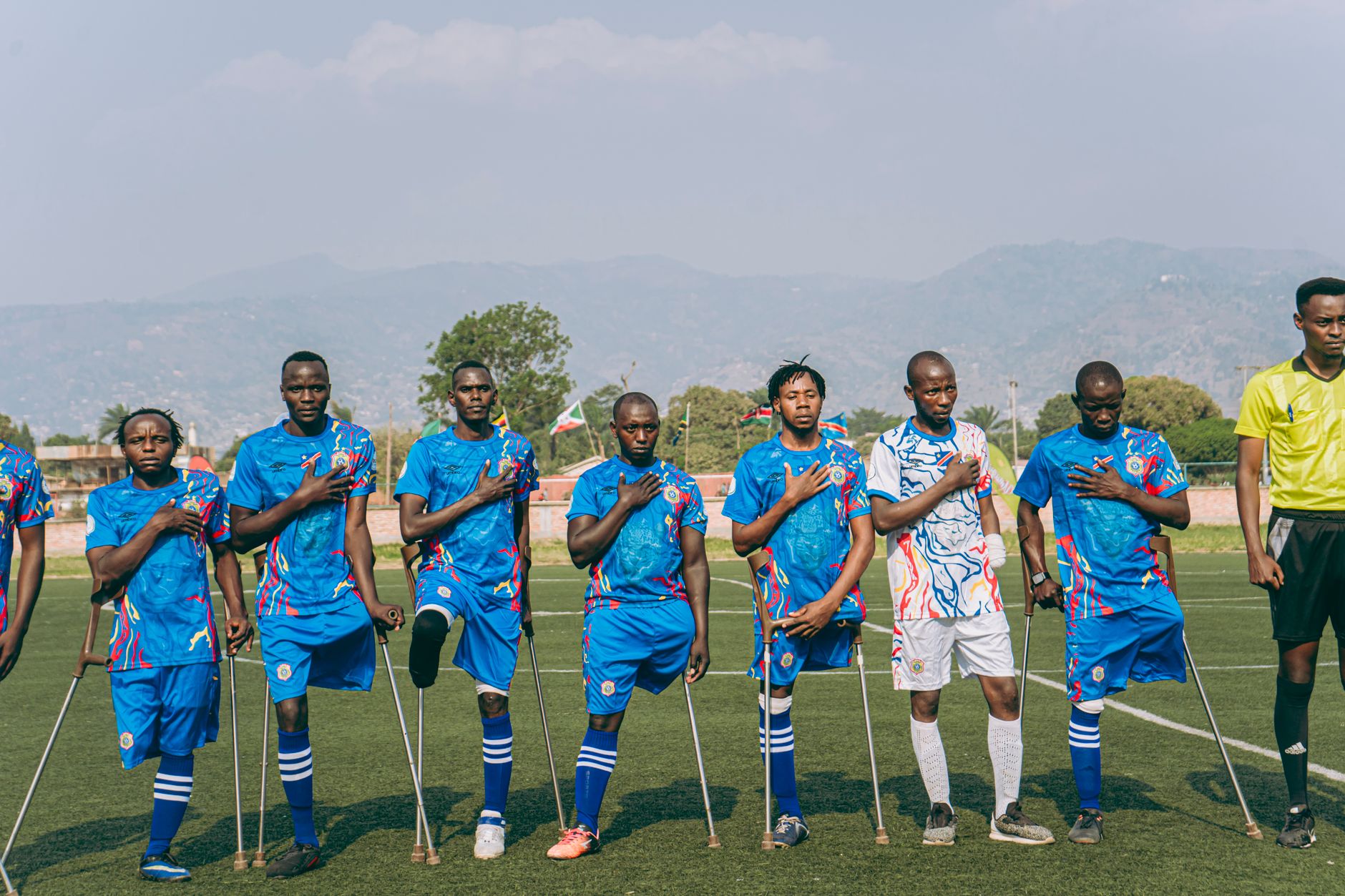
Photo by Chris wade NTEZICIMPA on Pexels
Step 1: Identify the Cape Verde national football team’s competitive profile
The Cape Verde national football team is a senior men’s football side representing Cape Verde in international competition. Its official football identity is linked to the Portuguese-speaking Atlantic nation, while its sporting identity is often expressed through the Blue Sharks nickname. The team plays under CAF, enters Africa Cup of Nations qualification, and competes in FIFA World Cup qualification alongside other African national teams. This geographical and administrative context matters because Cape Verde faces a demanding travel environment, long qualification schedules, and opponents with substantially larger populations and player-development systems.
Cape Verde became a FIFA member in 1986, and its international rise has been gradual rather than sudden. The country’s breakthrough at the Africa Cup of Nations came in 2013, when the Blue Sharks reached the quarter-finals in South Africa. They repeated that quarter-final achievement at the 2023 Africa Cup of Nations, staged in Côte d’Ivoire during January and February 2024 because of tournament scheduling. Those two runs are important evidence: Cape Verde is not merely a difficult qualifier; it has demonstrated the ability to perform across a major tournament group stage and knockout round.
According to the FIFA profile of Cape Verde, the national side operates within a relatively small football ecosystem compared with African heavyweights such as Nigeria, Egypt, Senegal, and Cameroon. However, population size does not translate directly into match quality. A diaspora network expands the player pool, and Portuguese football connections have helped Cape Verde access technically trained professionals. Wikipedia’s historical overview records the team’s tournament milestones, while ESPN’s Cape Verde results and schedule page is useful for checking recent fixtures and scorelines.
I recommend separating three labels when evaluating this team:
- Tournament ceiling: quarter-final appearances at the Africa Cup of Nations.
- Qualification reality: World Cup qualification remains difficult because CAF groups are highly competitive.
- Matchday danger: Cape Verde can make a technically superior opponent uncomfortable through compact defending and disciplined transitions.
The key analytical mistake is treating Cape Verde as either a minnow or a fully established giant. The data supports a more precise conclusion: the Blue Sharks are a competitive, tactically coherent African side whose best performances often emerge when the match becomes physically controlled and strategically narrow.
Want a broader tournament framework before assessing Cape Verde fixtures?
Step 2: How does Cape Verde build its squad and style?
Cape Verde builds its competitive advantage through a blend of diaspora recruitment, European experience, and tactical continuity. The team’s player pool has frequently included footballers developed or employed in Portugal, France, the Netherlands, and other European markets, reflecting Cape Verde’s historic connections with Portuguese-speaking football. This structure gives the Blue Sharks access to players accustomed to professional training environments, even though the country itself does not possess the same domestic depth as Africa’s largest football nations.
The most visible modern reference point is Ryan Mendes, a winger and captain whose international career has made him one of Cape Verde’s best-known attacking figures. Bebe has also been an important name in the national setup, offering power, direct running, and experience from professional football in Spain and Portugal. Júlio Tavares has provided a different attacking profile through aerial strength and penalty-area movement, while goalkeeper Vozinha has been associated with several prominent Cape Verde tournament campaigns. Squad lists change, so readers should verify the current call-up before assigning too much weight to any individual.
On the pitch, Cape Verde often appears most effective in a flexible 4-3-3 or 4-2-3-1 structure, although formations can change during possession and defensive phases. The basic principles are more useful than the numbers printed beside the lineup:
- The midfield protects the central corridor before pressing aggressively.
- Wide players attack space quickly after a turnover.
- The full-backs advance selectively rather than simultaneously.
- The striker provides a reference point for direct passes and crosses.
- Set pieces are treated as meaningful scoring opportunities, not merely restarts.
A specific insight is easy to miss in headline statistics: Cape Verde’s defensive value is often created before the final tackle. When the midfield screens the area in front of the centre-backs, opponents are pushed toward wider, lower-quality shooting positions. That means a simple possession percentage can mislead. An opponent may control the ball for 60% of a match while generating little central penetration, whereas Cape Verde’s fewer possessions may produce clearer transition chances.
The team’s main weakness follows from the same design. If the first forward pass after winning the ball is inaccurate, Cape Verde can lose territory and spend long periods defending. Likewise, an early booking for a holding midfielder can reduce the intensity of the press. This is why player availability, especially in central midfield and at centre-back, should be tracked before examining price or prediction markets. For a structured squad review, see our [Internal Link: African national team player-statistics guide].
Step 3: What do Cape Verde’s tournament results reveal?
Cape Verde’s tournament record reveals a side with a high competitive floor and a developing knockout ceiling. The quarter-final appearances at the 2013 and 2023 Africa Cup of Nations are the clearest evidence. In 2013, the Blue Sharks advanced from their group and continued into the last eight, a result that changed how the wider football audience viewed the country. In the 2023 edition, Cape Verde again reached the quarter-finals, confirming that the earlier achievement was not an isolated accident.
The 2023 tournament provided an especially useful case study. Cape Verde won Group B ahead of Egypt, Ghana, and Mozambique, collecting 7 points from 3 group matches according to the tournament record. That is a substantial return in a group containing Egypt, one of Africa’s most decorated national teams. Cape Verde then defeated Mauritania 1–0 in the round of 16 before losing 2–1 to South Africa in the quarter-finals after a penalty shootout. The final scoreline alone does not describe the entire campaign; the more important information is that Cape Verde controlled enough phases to progress from a challenging group and survive a knockout match.
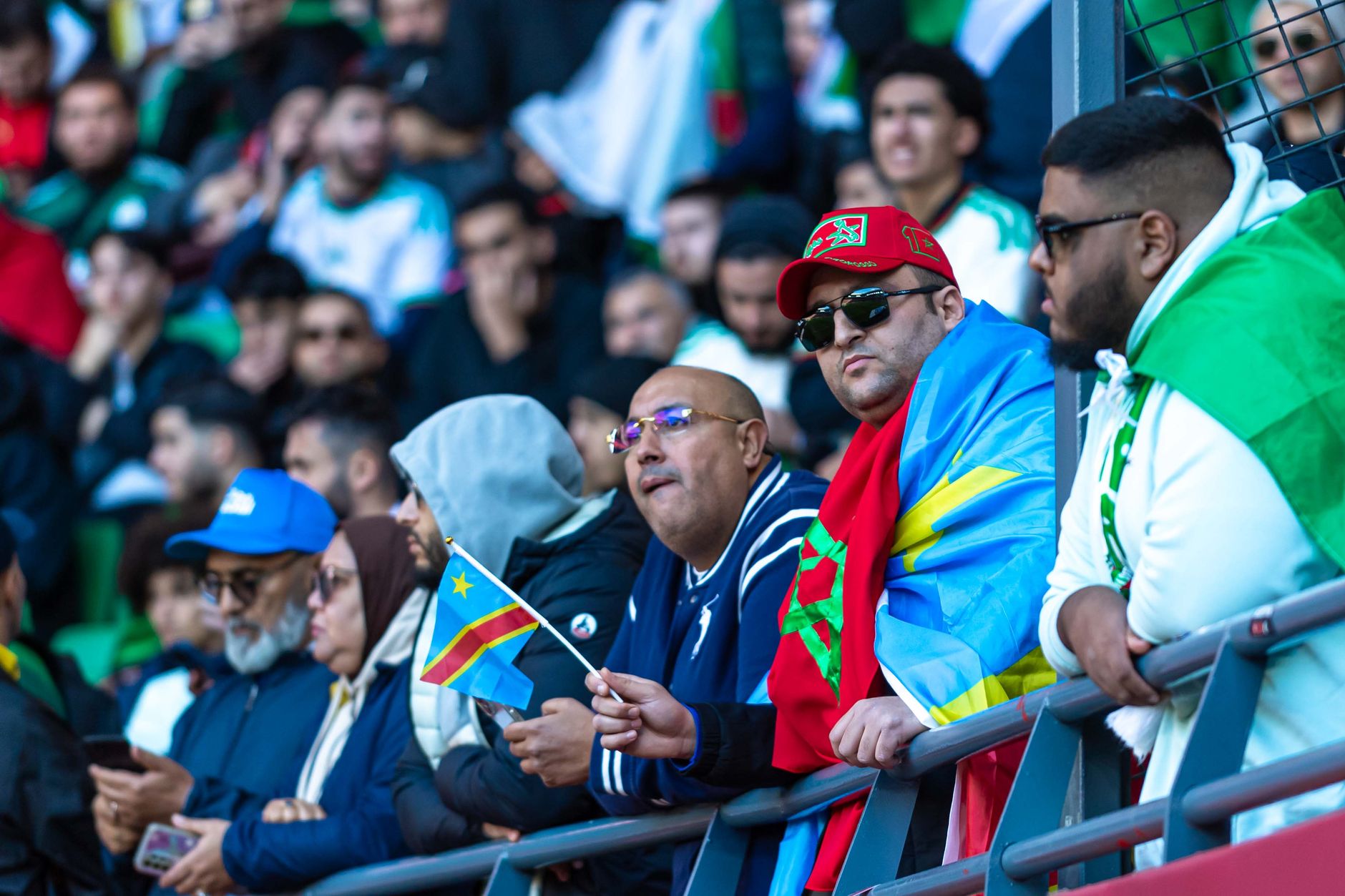
Photo by Guylain Kipoke on Pexels
The 2013 campaign also deserves careful treatment. Cape Verde’s progress in South Africa included a memorable 2–0 victory over Angola in the group stage, with the result helping the island nation reach the knockout phase. However, tournament comparisons must account for different opponents, coaches, venues, squad generations, and match conditions. A rational analyst should not convert one historic run into an automatic forecast for the next fixture.
The World Cup picture is more demanding. Cape Verde has not reached the FIFA World Cup finals in the historical record covered by the reference material, and its 2022 qualifying campaign ended before the global tournament. CAF qualification generally offers fewer margin-for-error opportunities than a three-match tournament group. A single away defeat, red card, or late set-piece goal can distort an entire qualification table.
My practical reading is therefore:
- At a major tournament: Cape Verde can be dangerous over 90 minutes and especially effective in a balanced group.
- Across qualification: consistency away from home becomes the central test.
- Against elite opposition: the first goal has outsized importance because Cape Verde’s preferred compact structure becomes harder to maintain when chasing.
Football Insights covers FIFA World Cup pathways with a focus on tactics and match context rather than reputation alone. Get the broader qualification picture before comparing opponents.
Step 4: How should you analyse a Cape Verde match?
To analyse a Cape Verde match responsibly, begin with information that can change the probability model: confirmed lineups, venue, travel, recent opponent strength, and the importance of the fixture. A 0–0 draw against Spain is not equivalent to a 0–0 draw against a lower-ranked opponent, because shot quality, territory, and defensive workload differ substantially. Similarly, a 2–2 result against Uruguay may show attacking resilience, but it should not be read as proof that Cape Verde will regularly trade chances with elite teams.
The schedule data supplied by ESPN includes several useful examples: Cape Verde drew 0–0 with Saudi Arabia, drew 2–2 with Uruguay, drew 0–0 with Spain, beat Serbia 3–0 in an international friendly, and drew 1–1 with Finland before winning 4–2 on penalties. These results illustrate variance in both match type and opponent quality. Friendly matches can be valuable for tactical clues, but their incentives, substitutions, and intensity are not identical to World Cup or Africa Cup of Nations qualifiers.
A practical five-variable checklist is more reliable than a single recent-result sequence:
- Central availability: Are the starting holding midfielder and two centre-backs fit?
- Transition pace: Can Cape Verde turn recoveries into forward attacks within two or three passes?
- Set-piece mismatch: Does the opponent concede height or second balls?
- Venue effect: Is the match in Praia, a neutral location, or the opponent’s stadium?
- Game state: Which team benefits if the score remains level after 60 minutes?
An information-gain point for bettors and match readers is that penalty shootout victories should be separated from 90-minute performance. Cape Verde’s 4–2 shootout win over Finland demonstrates composure under pressure, but it does not increase the underlying probability of scoring in open play in the next fixture. Likewise, a 3–0 friendly win over Serbia deserves attention, yet the opponent’s lineup and match motivation must be recorded before assigning it tournament value.
If you are using market prices, calculate the implied probability first: divide 1 by decimal odds. At odds of 2.50, the implied probability is 40% before bookmaker margin. Then compare that figure with your own estimate, including uncertainty for injuries and lineups. Never treat a positive-looking edge as a guarantee; the responsible objective is to avoid poor prices and uncontrolled exposure. Our [Internal Link: football prediction bankroll guide] explains how to record stake, odds, closing price, and net result.
Want a cleaner process for comparing match evidence with market numbers?
Step 5: verification
Verification is the step that protects an otherwise careful Cape Verde analysis from stale information. National-team football changes quickly: a player may withdraw, a coach may alter the midfield shape, or a fixture may move from a home stadium to a neutral venue. Before publishing a preview or placing any wager, confirm the current squad and competition through official or reputable sources.
Use this verification sequence:
- Check the latest federation announcement from the Federação Cabo-Verdiana de Futebol.
- Confirm the fixture, kickoff time, and competition through FIFA, CAF, or a trusted match database.
- Review the latest ESPN schedule for scoreline and lineup context.
- Compare at least five recent matches, separating competitive fixtures from friendlies.
- Record absences, suspensions, travel distance, and expected formation.
- Recalculate your probability after the starting XI is announced.
- Set a maximum stake before emotion enters the decision.
The Confederation of African Football remains the essential authority for Africa Cup of Nations competition information, while FIFA’s World Cup competition pages provide the international tournament framework. The value of these sources is not that they eliminate uncertainty; their value is that they reduce avoidable uncertainty. As the FIFA Laws of the Game put it, “A match is played by two teams, each with a maximum of eleven players.” That simple rule becomes operationally important when a late squad change removes a team’s main outlet or defensive organiser.
For responsible gambling, verify the operator’s licensing information in your jurisdiction, understand settlement rules, and keep a written ledger. Football Insights is designed for tournament coverage, tactical analysis, and player statistics; it should not be treated as a promise of profit. If your stake would cause financial stress, the correct analytical decision is not to increase confidence but to reduce or remove the stake.
Troubleshooting common failures
The most common Cape Verde analysis failure is overvaluing the team’s underdog narrative. The Blue Sharks’ 2013 and 2023 quarter-final appearances are meaningful achievements, but historical progress does not automatically predict the next result. A second error is using FIFA ranking position as a complete model; rankings summarise performance over time but cannot fully capture a missing captain, a suspended midfielder, or a difficult altitude and travel situation.
Another problem is confusing defensive discipline with defensive invulnerability. Cape Verde can protect the centre effectively, yet a fast switch of play may expose the far-side full-back. Teams that stretch the pitch, attack second balls, and force repeated defensive sprints can eventually create openings. Conversely, opponents that circulate possession slowly without moving Cape Verde’s midfield may produce impressive passing totals and few genuine chances.
Troubleshooting should be systematic rather than emotional:
- If the team concedes early: reassess whether the formation can press higher without exposing the centre-backs.
- If the attack creates little: check whether the wingers are receiving facing forward or with their backs to goal.
- If possession is low: measure transition shots and expected-threat sequences, not possession alone.
- If odds shorten sharply: identify whether the move reflects confirmed team news or public sentiment.
- If a friendly looks impressive: downgrade it unless minutes, motivation, and opponent strength are comparable.
- If your prediction loses: review the process, not just the scoreline.
A useful operational habit is to maintain two separate records: one for football accuracy and one for financial outcome. Track your predicted probability, available odds, stake, closing odds, result, and net position. After 20 or 30 bets, you may discover that your football opinions are reasonable but your prices are poor, or that your turnover is high while your actual return is negative. That distinction protects you from the comforting but dangerous belief that being right about a team means being profitable.
For more context, consult our [Internal Link: responsible football betting checklist]. The purpose is not to eliminate the emotion of supporting Cape Verde; it is to ensure emotion does not quietly control the money.
Why does Cape Verde remain difficult to face?
Cape Verde remains difficult to face because its compact defensive shape, European-based player pool, and direct transition threat can reduce the space available to stronger opponents. The Blue Sharks also possess tournament evidence, including 7 points from 3 group matches at the 2023 Africa Cup of Nations and a quarter-final finish. Their challenge is maintaining that efficiency across longer qualification schedules.
The team’s difficulty is situational, not mystical. When Cape Verde leads or keeps the match level, its structure can remain narrow and patient, forcing opponents to attack around the block. When Cape Verde falls behind, it must commit more players forward, increasing the risk of counterattacks and defensive separation. This explains why the opening goal should carry greater weight in a match preview than broad reputation.
Conclusion: the measurable case for the Blue Sharks
The Cape Verde national football team deserves serious analysis because its record combines clear tournament achievements with a tactical profile capable of troubling higher-profile opponents. The two Africa Cup of Nations quarter-final appearances, the 2023 group return of 7 points, and recent results against Spain and Uruguay demonstrate competitive substance, while the absence of a World Cup finals breakthrough shows that the next step requires consistency rather than one spectacular night.
My recommendation is straightforward: evaluate Cape Verde through confirmed personnel, central defensive availability, transition quality, venue, and price discipline. Do not inflate a friendly win, do not erase a strong performance because of a narrow defeat, and do not confuse a successful prediction with a successful investment. If you monitor turnover, stake size, closing odds, and net position, you will protect yourself while producing more honest football analysis.
Ready to follow Cape Verde’s 2026 tournament pathway with evidence rather than instinct?
Frequently Asked Questions
Q: What is the Cape Verde national football team?
A: The Cape Verde national football team is the men’s senior side representing Cape Verde in FIFA and CAF competitions. The team is commonly called the Blue Sharks and is governed by the Federação Cabo-Verdiana de Futebol. Cape Verde became affiliated with FIFA in 1986 and competes in Africa Cup of Nations and FIFA World Cup qualification.
Q: How did Cape Verde perform at the Africa Cup of Nations?
A: Cape Verde reached the Africa Cup of Nations quarter-finals in 2013 and 2023. At the 2023 tournament, played in Côte d’Ivoire in early 2024, Cape Verde collected 7 points from 3 group matches against Egypt, Ghana, and Mozambique. The team then defeated Mauritania 1–0 before losing to South Africa in the quarter-finals.
Q: Is Cape Verde a strong African football team?
A: Cape Verde is a competitive African team with a high defensive floor but less overall depth than nations such as Senegal, Nigeria, or Egypt. Its quarter-final tournament record shows genuine quality, particularly in compact defending and transitions. However, World Cup qualification requires consistency across several matches, including difficult away fixtures, so tournament potential should not be confused with elite continental status.
Q: How should I analyse a Cape Verde national football team match?
A: Start by checking the confirmed lineup, venue, competition, absences, and opponent strength. Then assess midfield protection, centre-back availability, transition speed, set pieces, and whether the opponent can attack the wide channels. For betting analysis, convert odds into implied probability, compare them with your estimate, and set a fixed stake before the match begins.
Q: What is the difference between Cape Verde’s friendly and competitive results?
A: Competitive results generally provide stronger evidence because qualification and tournament matches carry greater consequences than friendlies. Friendly fixtures may involve extensive substitutions, experimental formations, and different levels of motivation. A 3–0 win over Serbia or a 1–1 draw with Finland can reveal tactical possibilities, but those results should be adjusted for lineup strength and match incentives.
Q: Why can Cape Verde struggle after conceding first?
A: Cape Verde can struggle after conceding first because its compact structure must become more aggressive and open. More forward players are required, which can leave space behind the full-backs and beside the centre-backs. The team remains dangerous in transitions, but the original defensive advantage is reduced when the opponent can defend a lead.
Q: How much should I stake on a Cape Verde prediction?
A: Stake only an amount that you can afford to lose, and use a predefined bankroll percentage rather than emotional judgment. Many disciplined bettors cap a single football position at a small fraction of their bankroll, but the correct amount depends on personal finances, confidence, and market uncertainty. Record the odds, stake, result, and net return so your actual performance is measured over time rather than judged after one match.