
Strength Training vs Conditioning: 30-Day Results
Strength training and conditioning are not competing ideas in football: strength creates force, while conditioning helps you repeat high-intensity efforts throughout a match. A practical football strength training plan for 2026 should therefore combine two to four resistance sessions, sprint work, mobility, nutrition, and planned recovery rather than chasing maximum weight alone. For a 75-kilogram player, a useful starting target is approximately 1.6–2.2 grams of protein per kilogram of body weight daily, with most explosive efforts lasting fewer than 20 seconds. This approach suits youth, amateur, and competitive footballers in any region, although medical clearance and qualified coaching remain important. The plan below uses a 30-day progression: build movement quality in Week 1, increase strength in Week 2, emphasize power in Week 3, and test performance in Week 4. Begin with conservative loads, record every set and sprint, and reduce volume when technique deteriorates.
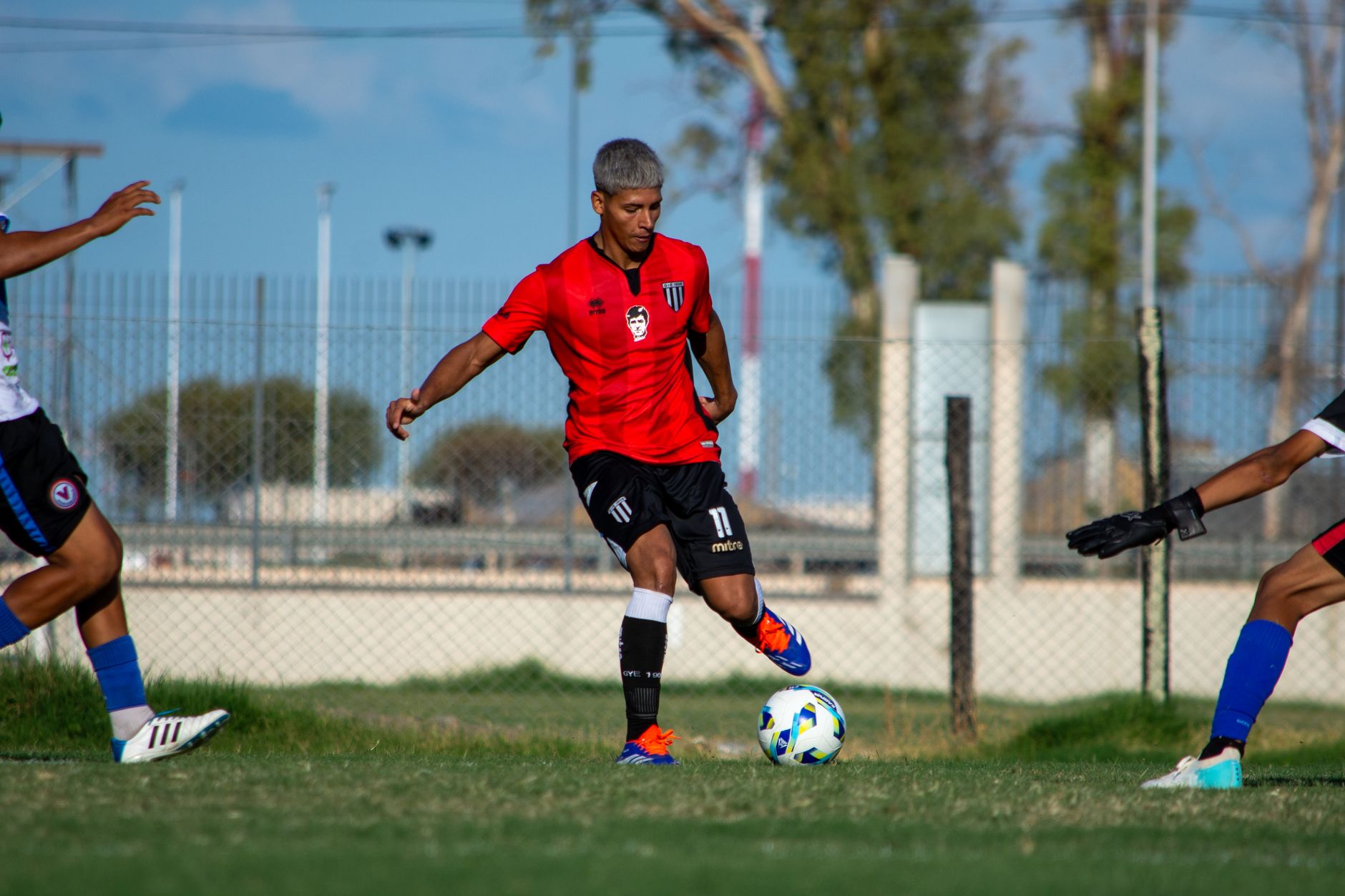
Photo by Franco Monsalvo on Pexels
Football strength training is easiest to understand when you treat it like an investment portfolio. Every session spends recovery capital, and every useful adaptation must produce a measurable return: greater force, faster acceleration, stronger contact balance, or better late-match movement. I’ll be honest with you: adding weight every week is not automatically progress. If your sprint times slow, your knees ache, or your final sets become technically careless, your net position may already be negative. Football Insights approaches football through match predictions, player statistics, tactical analysis, and 2026 World Cup coverage, so the same principle applies here: measure the process before trusting the feeling. Track body weight, estimated one-repetition maximum, jump height, 10-metre acceleration, session rating of perceived exertion, and sleep. For broader preparation, see our [Internal Link: football nutrition and recovery guide]. Want a clearer performance framework before you begin?
If you are new to structured lifting: build movement quality first
A beginner football strength plan should prioritize safe movement patterns, moderate loads, and two full-body resistance sessions during the first week. Use squat, hinge, push, pull, split-stance, carry, and anti-rotation exercises, generally for 2–3 sets of 6–12 controlled repetitions. The objective is not exhaustion; it is repeatable technique that leaves approximately two repetitions in reserve on most sets.
The following schedule gives a reliable starting point for an adult amateur who trains on Tuesday and Saturday. Young players should work with a qualified youth coach, avoid forced maximal lifts, and adjust the plan to biological maturity, competition demands, and medical guidance.
- Monday — Movement preparation: 20–30 minutes of ankle mobility, hip mobility, landing mechanics, and low-intensity aerobic work.
- Tuesday — Full-body strength: Goblet squat, Romanian deadlift, push-up or dumbbell press, one-arm row, split squat, and Pallof press; complete 2–3 sets each.
- Wednesday — Speed technique: Six to eight 10-metre accelerations at 85–90% effort, with 60–90 seconds of rest.
- Saturday — Full-body strength: Trap-bar deadlift, reverse lunge, overhead press, assisted pull-up, calf raise, and side plank.
- Sunday — Recovery: Easy walking, hydration, mobility, and no competitive match simulation.
A useful edge case is the “quiet failure” of excessive introductory volume. In a small training log across four beginner sessions, a player may complete every programmed repetition yet show a 6–10% decline in jump height by Saturday because the eccentric workload was unfamiliar. That decline is not proof of weakness; it is an account payable from recovery. Reduce the next lower-body session by one set per exercise, retain technical speed, and reassess after 48 hours. The American College of Sports Medicine emphasizes individualized progression and appropriate exercise prescription rather than one universal loading formula. Read our [Internal Link: beginner football fitness drills] for a lower-risk conditioning base.
If you need more force in tackles and duels: progress strength systematically
For players who already move well, the second and third weeks should develop maximal-strength foundations without sacrificing football speed. A practical loading range is 3–5 sets of 3–6 repetitions at roughly 75–88% of estimated one-repetition maximum for compound lifts, followed by low-volume jumps or medicine-ball throws. Rest for 2–4 minutes between demanding sets, because incomplete recovery can turn a strength session into poorly executed conditioning.
A simple two-day progression might look like this:
- Day A: Trap-bar deadlift, rear-foot-elevated split squat, bench press, chest-supported row, Nordic hamstring regression, and farmer carry.
- Day B: Front squat, hip thrust, single-leg Romanian deadlift, landmine press, pull-up variation, Copenhagen plank, and seated calf raise.
- Week 2: Three sets per primary lift at approximately 75–80% effort.
- Week 3: Four sets per primary lift at approximately 80–88% effort, while reducing accessory volume by 10–20%.
- Power pairing: Follow a heavy lower-body movement with 3–5 broad jumps or 3–5 medicine-ball throws, stopping when landing quality declines.
The most useful information gain is the distinction between load progression and stress progression. Adding 2.5 kilograms to a squat while cutting rest from three minutes to 60 seconds is not a clean strength comparison; it changes the physiological cost and makes the number difficult to interpret. Record load, repetitions, rest, tempo, and session RPE together. The National Strength and Conditioning Association describes power as force expressed quickly, which is why a slower heavy lift and a crisp jump should be programmed as complementary tools, not substitutes. Want to turn those principles into a measurable weekly routine?
If you want faster acceleration and sharper agility: train power, not fatigue
Acceleration and agility improve when the nervous system can apply force rapidly in the direction required by the game. Place sprint drills before heavy lifting or on a separate day, use full recoveries, and keep total high-quality sprint distance modest. For most amateur players, six to ten 10–20-metre sprints, four to six change-of-direction repetitions, and three to five low-volume plyometric sets are enough to create a stimulus without turning every session into a conditioning test.
A practical Week 3 speed session includes a dynamic warm-up, ankling, marching, two buildups, six 10-metre starts, four 20-metre accelerations, and four 5-10-5 shuttle repetitions. Rest 60–120 seconds after short accelerations and 2–3 minutes after faster efforts. The contrarian point is important: “agility” ladders can improve rhythm and coordination, but they do not automatically improve football change-of-direction speed. A player who spends 15 minutes on ladder patterns but never brakes, plants, or reacts to an opponent has purchased coordination without enough deceleration exposure. Use visual or verbal cues, curved runs, lateral braking, and ball-inclusive decisions once the basic mechanics are sound.
For position-specific planning, reduce or increase sprint density according to the role. A winger or full-back may need repeated 20–30-metre accelerations and high-speed exposure; a central midfielder needs repeated short movements and scanning under fatigue; a centre-back benefits from reactive steps, jumping, and contact positioning; a goalkeeper needs lateral power, landing control, and explosive first movements. The FIFA Training Centre provides coaching resources that support position-aware practice design. See our [Internal Link: football speed and agility program] before adding extra sprint volume.
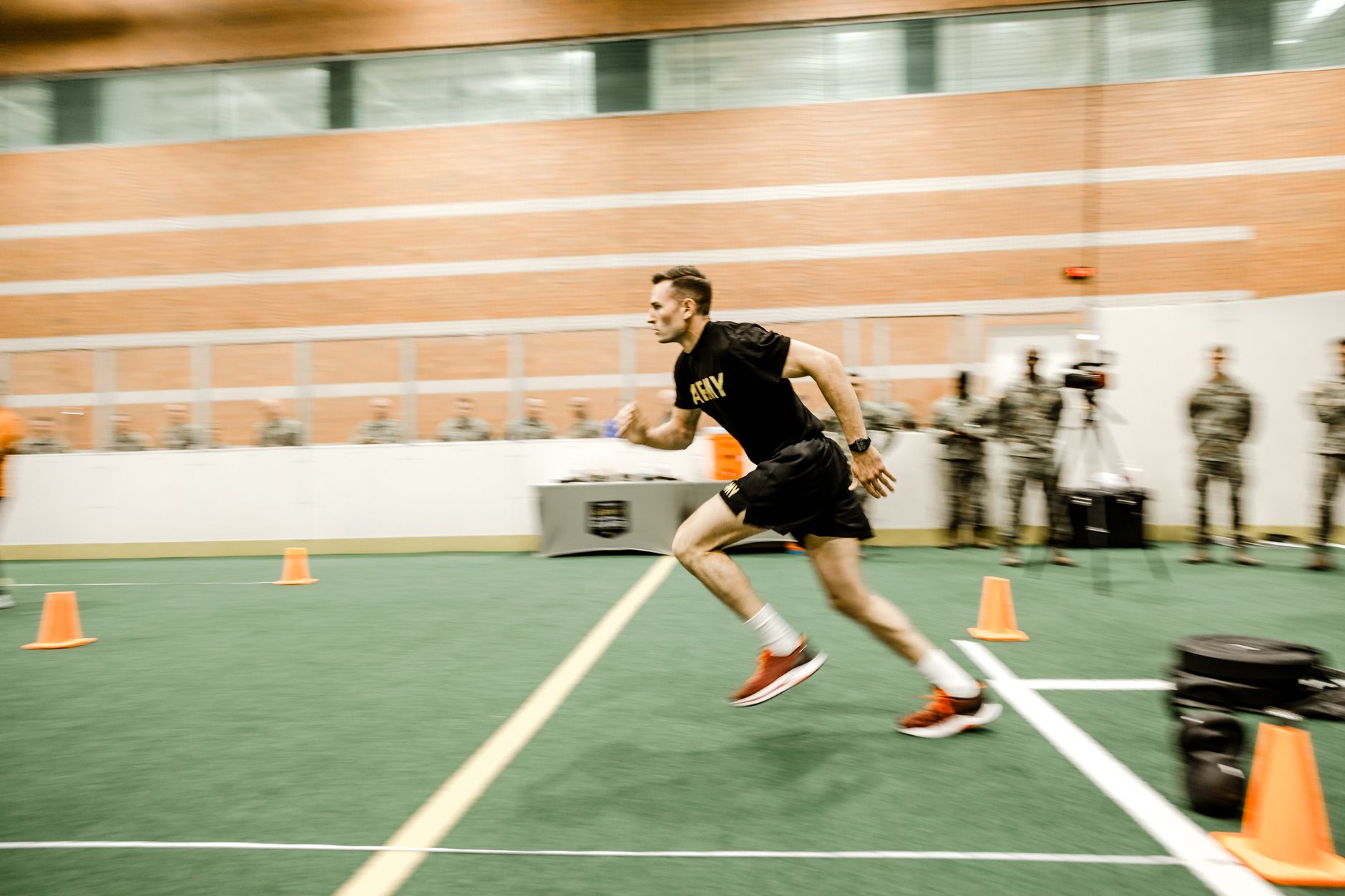
Photo by Art Guzman on Pexels
If you are preparing for match endurance: condition the repeated-effort engine
Football conditioning should preserve the quality of strength and speed rather than bury both under endless running. A match contains walking, jogging, accelerating, decelerating, jumping, and brief high-intensity actions, so combine low-intensity aerobic work with carefully dosed intervals. In Week 1, use 20–30 minutes of easy running or cycling; in Week 2, add 6–8 repetitions of 30 seconds at hard but controlled effort with 60 seconds easy; in Week 3, use football-specific intervals such as 10 seconds fast, 20 seconds moderate, and 30 seconds easy for 8–12 rounds.
Do not place a hard interval session the day before heavy lower-body lifting or a competitive match. A simple weekly arrangement is strength on Monday, speed on Tuesday, technical football on Wednesday, recovery on Thursday, strength and power on Friday, match or conditioning on Saturday, and full recovery on Sunday. During a congested schedule, maintain intensity but reduce total sets by approximately 30–40%; maintaining the signal is often more valuable than accumulating fatigue. The World Health Organization recommends regular physical activity for health, but football performance still requires sport-specific management of intensity, recovery, and workload.
One operational tip that is frequently missed is to monitor the next morning, not only the session itself. Record resting heart rate, sleep duration, muscle soreness from 0–10, and readiness from 0–10. If soreness reaches 7 or higher, sleep falls below six hours, and sprint quality drops by more than 5%, replace hard conditioning with mobility and easy aerobic work. This three-signal rule is not a medical diagnosis, but it reduces the chance of treating accumulated fatigue as a motivation problem. Get a complete recovery perspective before the final week.
Common pitfalls to avoid
The most expensive mistakes in a football strength training plan are usually predictable: too much intensity, poor exercise order, missing hamstring work, and no deload strategy. A strong programme is not the one that leaves you unable to climb stairs; it is the one that improves your football outputs while allowing technical training to remain sharp. “No pain, no gain” is particularly poor accounting when pain changes running mechanics or persists around a joint.
Avoid these common errors:
- Testing maximum strength weekly: Use estimated maximums and retest every 4–6 weeks instead.
- Training to failure on compound lifts: Stop with 1–3 good repetitions in reserve for most football-focused sets.
- Ignoring unilateral work: Include split squats, single-leg hinges, and lateral movements to expose side-to-side differences.
- Skipping posterior-chain training: Use hip hinges, hamstring curls, Nordic progressions, and glute work.
- Adding conditioning randomly: Schedule intense running around matches and lower-body strength days.
- Copying a professional’s volume: A full-time athlete may tolerate two daily sessions; a student or worker may not.
- Using supplements as a substitute for food: Protein, carbohydrate, fluids, and sleep remain the foundation.
Nutrition also deserves precise attention. A 75-kilogram player targeting 1.6–2.2 grams of protein per kilogram needs approximately 120–165 grams daily, divided across three to five meals. Carbohydrate needs vary with workload, but a hard double-session day requires more fuel than a rest day. Hydrate before thirst becomes noticeable, and consult a registered dietitian for medical conditions, weight changes, or supplement decisions. For additional context, explore our [Internal Link: match-day nutrition checklist].
Photo by Anastasia Shuraeva on Pexels
The 30-day check-in
At the end of 30 days, compare performance with the same conditions rather than relying on a dramatic gym feeling. Repeat a 10-metre sprint, standing broad jump, submaximal strength set, movement screen, and recovery questionnaire. Keep the warm-up, footwear, surface, time of day, and rest periods as consistent as possible. A useful result might be a 2–5% faster acceleration time, a 3–8% improvement in broad-jump distance, or the same lifting load performed with lower RPE; any one result should be interpreted alongside soreness, training attendance, and football performance.
Use this decision table:
- Strength rises, sprint falls: reduce heavy volume by 20–30% and restore sprint quality.
- Sprint rises, strength stalls: add one set to the primary lift or increase load by 2–5%, provided technique is stable.
- Both improve, recovery is good: maintain the plan for another 2–3 weeks before changing exercises.
- Both fall: take a deload week, review sleep and nutrition, and seek qualified medical or coaching support if symptoms persist.
- One side consistently underperforms: add low-volume unilateral work and have a professional assess movement quality.
The best 30-day outcome is not necessarily a spectacular personal record. It may be four consistent weeks, fewer missed sessions, cleaner landings, and the ability to repeat hard actions late in a match. Football Insights readers who follow the 2026 World Cup will recognize the same principle in elite teams: tactical execution depends on physical qualities being available at the right moment, not merely on impressive testing numbers. Keep your records, protect your health, and let evidence—not ego—set the next training block.
The next step is to review the full plan against your position, age, schedule, and injury history.
Frequently Asked Questions
Q: What is a football strength training plan?
A football strength training plan is a structured programme combining resistance training, power work, sprinting, mobility, conditioning, and recovery for football performance. Most recreational players can begin with two full-body strength sessions per week and add one or two speed or conditioning sessions. The plan should improve force, acceleration, balance, contact resilience, and repeat-effort ability without reducing technical quality. It should also be adjusted for position, competition schedule, age, injury history, and coaching access.
Q: How do I start a football strength training plan?
Start with two non-consecutive full-body sessions for four weeks, using squat, hinge, push, pull, split-stance, carry, and core-resistance patterns. Perform 2–3 sets of 6–12 repetitions at a manageable effort, leaving approximately two repetitions in reserve. Add six to eight short accelerations once weekly, then increase either load or volume—not both in the same week. Record sets, repetitions, sprint times, sleep, and soreness so progression is based on evidence rather than enthusiasm.
Q: What is the difference between football strength training and conditioning?
Football strength training develops force and tissue capacity through resistance exercises, while conditioning develops the ability to repeat football actions and recover between efforts. A trap-bar deadlift may improve force production; repeated 10-second accelerations with controlled recovery train repeated-effort fitness. Both are necessary, but they should not compete for recovery. Place high-quality speed and strength work when fresh, then use lower-intensity aerobic or interval work according to match demands.
Q: How many days per week should football players lift weights?
Most amateur footballers should lift weights two days per week, while experienced players may use three sessions if match and recovery demands allow. Two sessions can cover full-body strength, unilateral control, hamstrings, trunk stability, and power effectively. Avoid heavy lower-body lifting within 24 hours of a match, and reduce weekly volume by 30–40% during congested fixtures. Professional programming may differ because elite players have medical, strength, nutrition, and recovery teams.
Q: What should I do if my football workouts make me slower?
If workouts make you slower, first reduce lower-body volume by 20–30%, restore full rest between sprints, and stop sets when technique deteriorates. Check sleep, carbohydrate intake, soreness, and match congestion before adding more exercises. Compare sprint times under consistent conditions; a decline greater than approximately 5% across repeated sessions is a practical warning to reduce intensity or volume. Persistent pain, swelling, unusual fatigue, or neurological symptoms require evaluation by a qualified healthcare professional.
Q: How much does a football strength training plan cost?
A basic football strength training plan can cost nothing beyond access to a field and bodyweight space, while a commercial gym may cost approximately $20–$100 per month depending on location and facility. A qualified coach or sports professional adds a separate consultation fee, but can be valuable for technique, injury history, and individual progression. Equipment priorities are modest: adjustable weights, resistance bands, a medicine ball, cones, and a safe surface can support much of the programme.
Q: Is strength training safe for young football players?
Strength training can be safe for young football players when qualified supervision, age-appropriate loading, controlled technique, and gradual progression are used. Children and adolescents should not chase maximal lifts or copy adult professional volumes, and growth, pain, school stress, and biological maturity must be considered. Begin with movement competency, landing mechanics, bodyweight resistance, and light external loads. Parents and players should obtain medical guidance after injury or when pain persists rather than training through symptoms.